Harnessing the Wide-Angle Insights of Quantexa Knowledge Graphs
A wide field of view and powerful processing make Quantexa Knowledge Graphs the James Webb Telescope of graph analytics.
Harnessing the Wide-Angle Insights of Quantexa Knowledge Graphs
A wide field of view and powerful processing make Quantexa Knowledge Graphs the James Webb Telescope of graph analytics.



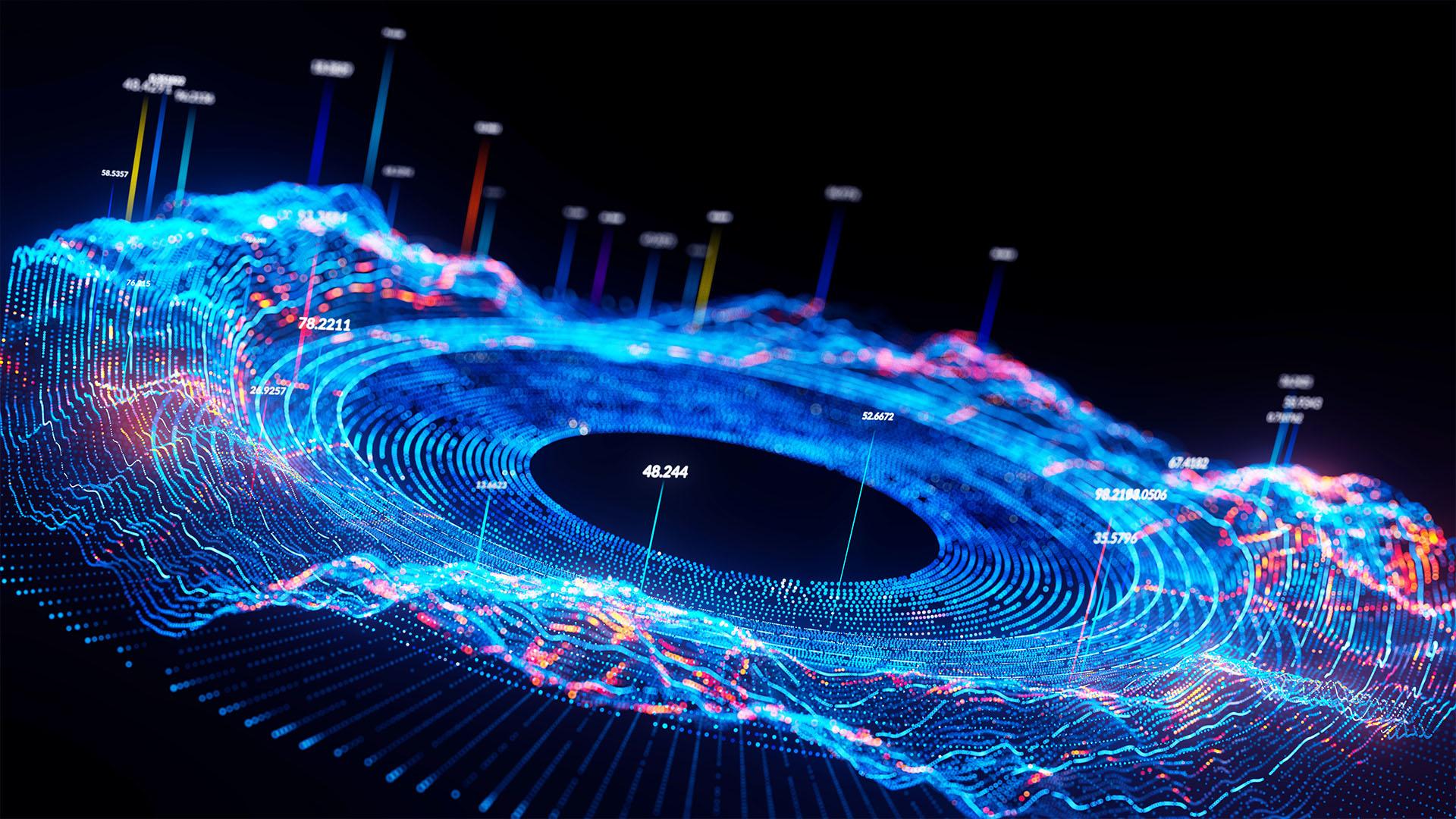
Knowledge graphs have become increasingly prominent in the suite of graph analytics tools, so it's important to be clear about what they are. In their simplest form, knowledge graphs are graph structures that represent nodes, edges, and labels. Any object, place, or person can be a node. An edge defines the relationship between the nodes, while a label provides a metadata layer, essentially encoding knowledge to be computed and searched at scale through matrix algebra and other computational mathematics approaches.
The Alan Turing Institute gets a little more granular in its description:
"Knowledge graphs...organize data from multiple sources, capture information about entities of interest in a given domain or task (like people, places or events), and forge connections between them. In data science and AI, knowledge graphs are commonly used to:
Facilitate access to and integration of data sources
Add context and depth to other, more data-driven AI techniques such as machine learning; and
Serve as bridges between humans and systems, such as generating human-readable explanations, or, on a bigger scale, enabling intelligent systems for scientists and engineers."
The Turing Institute also makes a compelling case for their raison d’etre.
“Knowledge graphs are at the core of many human-facing technologies, such as search, question-answering, dialogue and recommenders.... Many organizations, such as healthcare and financial service providers, are faced with data silos across their organizational units. Knowledge graphs can help with, but not limited to, data governance, fraud detection, knowledge management, search, chatbot, recommendation as well as intelligent systems across different organizational units.”
As the following Quantexa video on graph analytics illustrates, wide-scale knowledge graph implementations like those described by the Turing Institute can be more computationally lightweight. They are likely used in situations where search and classifiers elevate new and interesting networks across broad spaces, and to provide inputs into models at scale.

Knowledge graphs commonly represent the widest networks, and can be used to identify and analyze points of interest within them. It’s like looking at a large geographical area with a telescope: The telescope reveals aspects of the view that would otherwise be hidden, such as the curvature of the earth. While localized egocentric sub-graphs leave no stone unturned, wider knowledge graphs (in the Turing sense of the term) can elevate the unknown across macro-scale networks.
For example, knowledge graphs could allow a bank to fulfill its operational resilience commitments to audit the supply chains of all its suppliers, not just one. It could assess insights of entities sharing certain characteristics within extended supply chains, perhaps then instigating specific analyses into revealed parts of the supply chains. For example, a knowledge graph can highlight greenwashing by entities that claim green credentials, yet have multiple high-carbon emitters hidden inside their corporate structure and across their supply chains.
What makes Quantexa Knowledge Graphs different?
The success of Quantexa Knowledge Graphs starts with the company's Decision Intelligence Platform.
Quantexa’s Decision Intelligence Platform helps users cleanse, enrich, match, and understand data by connecting siloed data sources, publishing and visualizing complex relationships through real-world context. The result is a single 360-degree view of data, which offers you a flexible view of entities, objects, and identifiers across your networks, with accompanying graph analytics at your fingertips. This helps you service multiple business use cases across all your organization’s data.
 Here are four advantageous capabilities of the platform:
Ingesting data is easy. The platform empowers data scientists, data engineers and data-driven analysts to easily prepare, configure, and ingest billions of data points across multiple formats.
Entities are resolved to 99%+ accuracy with Quantexa, yet grant you a flexible view of entities, objects and identifiers across your networks that can service multiple use cases. For example, fraud compliance cases benefit from “fuzzier” intelligence, where clues get highlighted for further investigation. On the other hand, entities in your GDPR-compliant marketing database must be precisely understood.
By leveraging graph analytics and deploying scoring methodologies, context becomes revealed, available, and usable. For example, you can detect key patterns and relationships across your data estate to identify and calibrate features in machine learning workflows.
Because Quantexa’s Decision Intelligence Platform works with your existing data estate, there is no need for a dedicated graph database, let alone multiple graph databases, with their accompanying schema constraints.
The Quantexa Decision Intelligence Platform delivers analytics and contextual insights to leading organizations worldwide, helping them identify crime, build intelligence, clean datasets, score risk decisions, and identify connections and relationships.
Predicated on the enterprise-wide, cross functional, entity-focused Quantexa Decision Intelligence Platform, Quantexa Knowledge Graphs allow us to perform contextual graph analytics at massive scale. They can do this because they:
Center knowledge graphs on the certainty and intelligence of Quantexa Entity Resolution capabilities, ensuring validation, accuracy, and assurance
Span your organization’s full data estate and consume many data types
Incorporate an inferred prebuilt ontology, so you don't need to create your own
Are computationally light, meaning you can:
Run in batch at-speed and with intensity for automated analysis, including populating feature stores for model training or real-time model inference
Interactively explore the largest networks to determine entities and regions of interest, augmenting human investigatory workflows
Are Python-based and extensible. They're easy for developers and data scientists to directly interact with, and to integrate into your data science and AI workflows. For example, they can connect to deep learning, neural networks, search, and other techniques to reveal more in your business use cases
Quantexa Knowledge Graphs work best at wide scale. Many tools are capable of assessing a single company, but what if you have 10, 50, or 200 million customers, and you want to understand all entities across billions of records without having to take time defining an ontology (i.e., a structured [semantic] framework)? Graph databases struggle to cope with such scale, and offer less analytical interaction. In one case, Quantexa Knowledge Graphs performed the same job as a graph database twelve times as quickly as other knowledge graphs, while casting the net wider to ask more questions.

To return to the telescope analogy, all telescopes are not the same. Quantexa Knowledge Graphs deliver vastly more expansive insights and immediately available analytics opportunities. They're the James Webb Telescope of knowledge graphs.
The intersection of knowledge graphs and Generative AI
As Generative AI technologies evolve, knowledge graphs have taken on increased resonance—most prominently to bring organizational context to large language models (LLMs) in knowledge engineering workflows. Context derived from knowledge graphs, overlaying enterprise datastores and unstructured datasets, can bring contextual, traceable enterprise intelligence to the general knowledge encapsulated in LLMs. For example, which new relationships should you explore further for greenwashing insights in your supply chains? The traceability of graphs is particularly pertinent to regulated industries such as financial services, healthcare, and the public sector.
Large language models have a great understanding of the world, but they don’t understand your data. When combining your contextual intelligence as a knowledge graph with the vast knowledge corpus of an LLM, that is a best of breed marriage. Also, through copilots, AI model use need no longer be the preserve of data scientists, but can be accessible to decision-makers.
In future blogs, we will explore the AI and knowledge graph intersection in Retrieval Augmented Generation infrastructures, and also show examples of Quantexa’s Knowledge Graphs.
In conclusion
Knowledge graphs offer telescopic breadth to network intelligence, using and complementing a range of AI and statistical matching techniques to draw new insights and connections across large-scale networks at speed.
Like NASA’s galaxy-investigating James Webb Telescope, Quantexa Knowledge Graphs offer you the widest scale for your investigations. Using them, you can see more across your entire data estate without duplicating data stores or needing to adhere to schema constraints or define ontologies. Quantexa Knowledge Graphs provide flexibility to immediately view and analyze your widest networks, to identify nodes for focused egocentric network generation, and elevate value-laden customer use cases via LLM-enhanced AI and data science pipelines.